

Raising your child without screens may seem unrealistic, even outdated. In a digitally woven world, where learning, entertainment, and communication are increasingly online, growing up screen-free can appear impractical.
But that’s not the point. This is not about completely rejecting technology. It’s about understanding the timing of your child’s brain development.
The Power of Early Experiences
In the early years of your child’s life, their brain is developing at an increased pace, with millions of neural connections forming every second. These connections are highly sensitive and shaped by the child’s experience, as well as what they see, hear, touch, feel, and interact with.
The early brain is highly sensitive to stimulation. So when your children receive human interaction, conversation, eye contact, movement, and play, the neural circuits responsible for language, emotional regulation, attention, and problem-solving strengthen rapidly. But when stimulation is coming from the screen, the quality of those connections can change.
For young children, especially those under six, excessive passive screen exposure can hinder various key areas of development, including
- Language and vocabulary growth
- Attention span and focus
- Emotional regulation
- Sleep quality
- Social interaction skills
- Physical movement and coordination
These early years are a critical window as the experiences children receive during this time lay the foundation for lifelong learning, behaviour, and mental health. And this window does not reopen later.
That is why the conversation around screens is important. It is not about fear; it is about intentional parenting to protect this precious timeline.
What Does “Screen-Free” Really Mean?
Going screen free does not mean anti technology. It is choosing real interactions and playing over mindless screen time. By not choosing your mobile or tablet as the primary source of information for your kid, you are preserving their precious childhood from highly stimulating and fast paced content online.
Why Early Screen Exposure Feels Helpful (But Isn’t Always)

Imagine you are in a fine dining restaurant for a much-awaited dinner night with your family. The vibe is calm, and you were really looking forward to this. Suddenly, your kid started crying out of nowhere. What would you do?
Just like any other innocent parent, you would hand over your phone expecting a calmer evening. This could feel like victory. But what’s happening in those little brains is really concerning
The Instant Calm Effect
When you hand over the phone, your child often stops crying within seconds. The bright colours, fast transitions, and engaging sounds immediately capture your child’s attention. The environment feels peaceful again, and you feel relieved.
However, what looks calm on the outside is actually intense stimulation on the inside. The child’s brain has not learned to process frustration or discomfort, as it has been distracted away from it. Over time, repeated patterns like this can teach their brain to seek external stimulation whenever their emotions get uncomfortable.
The Role of Boredom
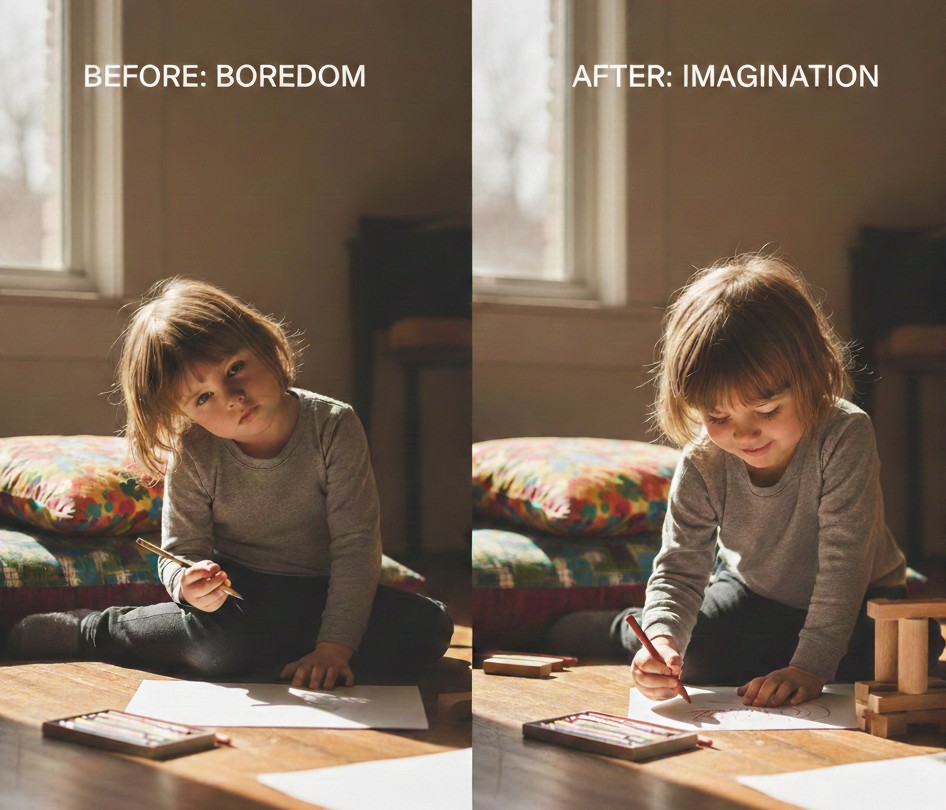
As adults, we are uncomfortable sitting with boredom. But, for children, it serves an important purpose in their developmental journey. When a child says they are bored, their brain is seeking engagement. If you give them time and space, it will support their urge to create, imagine, and explore. This process strengthens creative thinking, attention span, and independent thinking.
If your child is getting instant digital stimulation with no time to be bored, their brain gets used to high-speed input. Slowly, slow real-life activities may feel less engaging, which can affect their attention span and persistence.
Emotional Regulation Is Built, Not Installed
The ability of self regulation is learned through life experiences. It is not a natural skill that children are born with. When you help your child through intense feelings by sitting beside them, acknowledging their frustration, and guiding them calmly, their nervous system learns how to calm down.
If screens become the primary tool that helps, then the child may struggle to develop this internal skill. The device becomes the regulator instead of the child’s own coping mechanism.
Conclusion
Raising a child without screens in the early years is not about rejecting modern life. It is about recognising that the first few years of development are biologically unique and cannot be repeated. During this time, the brain is building its core architecture, and every repeated experience strengthens certain neural pathways while weakening others.
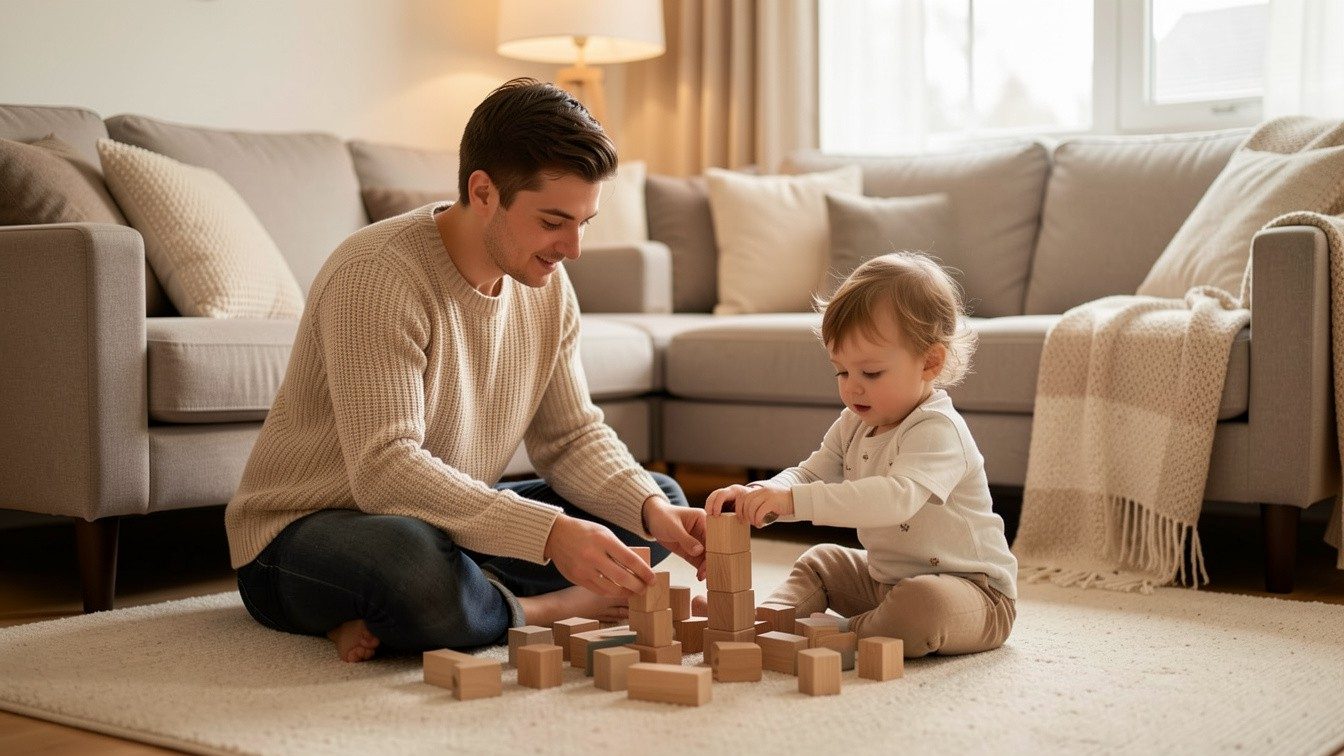
Screens are not inherently harmful, but they are powerful. When screens are introduced too early or used too much, they can quietly replace the very experiences that build language, emotional regulation, attention, and social connection. What feels convenient in the moment can gradually shape long-term habits and neural patterns.
Parents of children under six should focus more on awareness than perfection. It means pausing before handing over a device and asking whether this moment could instead become an opportunity for connection, conversation, or growth. It means choosing presence over convenience whenever possible.
Technology will always be available to our children. What will not always be available is the early years of rapid brain development. Protecting it is not about fear. It is about giving children the strongest possible foundation so that when they eventually step into the digital world, they do so with resilience, focus, and self control already in place.