

From my experience as an early childhood expert and psychologist, I’ve noticed something important: parents rarely ask, “How do I build secure attachment in my child?” What they really ask is, “Why is my child so clingy?” or “Will my child ever become independent?” If you’re wondering the same, understanding how to build secure attachment with your child can make a real difference.
Many of us grow up believing that independence means being emotionally distant. But in reality, true independence begins with connection. When a child feels safe, supported, and understood, they gain the confidence to explore the world, whether that’s walking into a classroom, making a new friend, or trying something unfamiliar. This sense of emotional safety is what we call secure attachment.
Secure attachment in children isn’t just a parenting trend or a buzzword. It’s one of the most well-researched foundations of healthy emotional development. The reassuring part? You don’t need to be a perfect parent to build secure attachment in your child. What matters most is showing up, responding with care, and creating moments of connection, again and again.
What Secure Attachment Looks Like in Everyday Parenting
Secure attachment is like an emotional safety net. It means your child trusts you to comfort them when they’re upset and to support them when they want to explore and have fun (Bowlby, 1969).
Try to see yourself as both a “Safe Haven” and a “Secure Base.”
You can think of your role in two simple ways:
- A Safe Haven: When the world feels overwhelming or scary, your child knows they can come to you for comfort and reassurance.
- A Secure Base: When your child feels safe, they use that sense of security to step out, explore, and enjoy the world around them.
What Secure Attachment Is Not.
- Never letting your child cry.
- Being physically attached to them 24/7.
- Giving in to every demand (permissive parenting).
India’s Family Structure, Schooling, and Modern Parenting Challenges
One of India’s greatest strengths is its tradition of joint and extended families. Unlike many Western models of attachment that focus mainly on the mother, Indian children often grow up cared for by grandparents, aunts, uncles, and older siblings. This shared caregiving, sometimes called allomothering, can be a powerful example of secure attachment parenting in children.
Studies show that children can form secure attachments with several caregivers (Cassidy & Shaver, 2016). Having a group of loving adults helps protect children. For example, research on Indian teens found that being securely attached to both parents and the family as a whole leads to better mental health than attachment to just one parent (Mishra et al.). However, as family structures in India evolve, it is important to consider how these changes impact attachment and support systems.
However, family life in India is changing. In cities like Bengaluru and Mumbai, more parents are raising children in nuclear families, often alongside early academic pressure and busy work schedules. If you’re in a nuclear family, try to help your child connect with more caregivers, through regular visits with relatives or video calls. Understanding how to build secure attachment with your child can help in both joint and nuclear family setups to help children feel emotionally secure.
The National Curriculum Framework (NCF) 2022 highlights this by making “Socio-Emotional Development” (Curricular Goal 4) a key part of early learning (NCF, 2022). Remember, emotional security is the base for academic success, not the other way around.
How Secure Attachment Grows at Every Stage

0-2 Years: The Foundation of Trust
At this age, your baby’s brain is developing quickly. What they really want to know is, “Am I safe?”
- Always respond to your baby’s cries. You cannot “spoil” a baby by comforting them. Research shows that consistently meeting your baby’s needs helps them feel safe and builds trust (Bowlby, 1969; UNICEF India). Some elders may worry that too much comfort will make a child dependent. However, research shows that responding warmly to a child’s needs actually builds emotional security and supports healthy development. If family members are unsure, gently share that this approach helps children feel secure and confident in the future.
- In India, traditional practices like massage (malish) are wonderful for bonding. Touch during massage releases oxytocin, which helps you and your baby feel closer (UNICEF India). Another helpful approach is “Serve and Return.” When your baby coos, coo back.
When they point at something, look at it with them. These simple back-and-forth moments help your baby’s brain grow strong.
2-3 Years: Big Feelings and Autonomy

At this age, kids want to explore but also need comfort. They might run off to play, then come back for a hug.
- The Challenge: Tantrums.
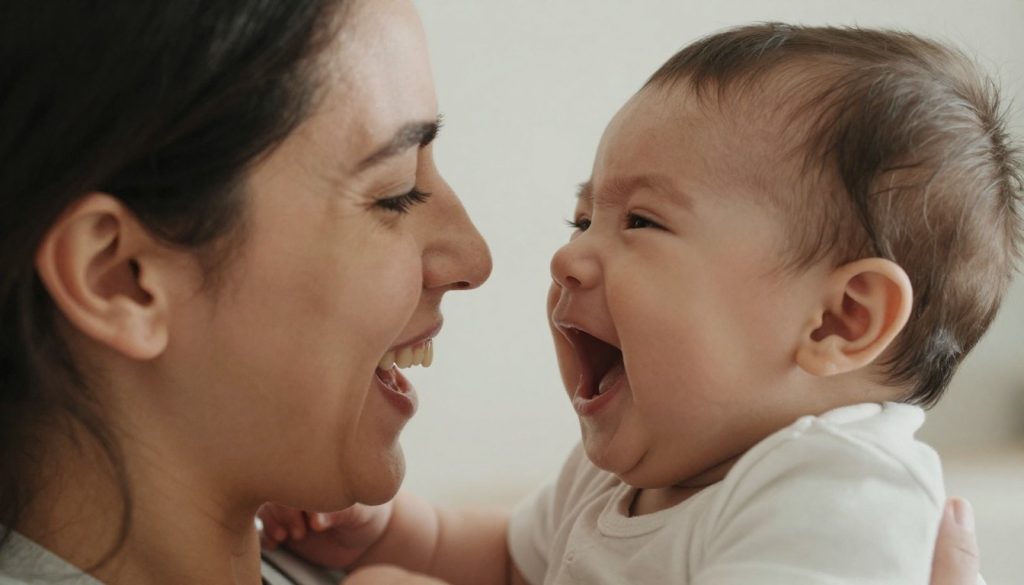
- What can you do? Stay calm when your child is upset. If they have a meltdown, try to stay calm. Let them know you notice their feelings (“You are angry the toy broke”) without trying to fix things right away. Show your child you’re happy to see them. Smile or let your face light up when they come into the room.
3-6 Years: The Social World
When children start preschool or kindergarten, their world gets bigger.
- The Challenge: Separation anxiety at drop-off.
- What can you do? Build a “bridge” for your child. For example, give them something of yours to hold or talk about what you’ll do together after school. Many Indian families create special parting or reunion rituals, such as touching feet or saying a prayer before leaving, which can provide additional comfort. These familiar routines help children focus on the joy of reuniting, rather than the period of separation.
- Indian Context: The NCF 2022 highlights the teacher’s role here. A warm teacher-child relationship can compensate for stress at home.
How to Be the “Good Enough” Parent
One of the most reassuring findings from research is that you only need to be in tune with your child about 30% of the time to build secure attachment (Tronick & Gold, 2020).
- 30%: We are in tune.
- 30%: We miss the mark (we yell, ignore, misunderstand).
- 30%: We are repairing.
Repair is the magic. If you lose your temper, apologize. “I shouted earlier. I was frustrated, but I shouldn’t have yelled. I love you.” This teaches your child that relationships can survive conflict. In Indian families, showing affection through small gestures can also be a meaningful form of repair. Sharing a favorite snack, offering a comforting hug, or engaging in a playful activity they enjoy can reinforce your apology and help heal misunderstandings.
What Parents Can Do This Week
- The Reunion Ritual: When you see your child after school or work, put your phone away for the first five minutes and greet them warmly. Even if you’re busy, these short, focused moments can really strengthen your bond. Try asking your child to share a highlight from their day or play a quick game together. These small moments help build secure attachment.
- Special Time: Spend 10 minutes each day doing whatever your child wants, without teaching or correcting.
- Name the Feeling: Rather than saying “Don’t cry,” try saying, “I see you are sad because…”
- Repair After a Rough Moment: If you lose your temper, go back and apologise. Share how you were feeling, rather than focusing on what your child did.
- Touch: Giving a firm hug, a pat on the back, or ruffling their hair (if they like it) helps release stress-reducing hormones. Predictability: Create a simple routine for bedtime or mornings. Routines give your child stability and help them feel secure.
- Observer Mode: Take five minutes to simply watch your child play without stepping in. Notice what they enjoy. Watching helps you understand and support your child’s interests.
Myths vs. Facts About Secure Attachment
| Myth ❌ | Facts ✅ |
| “Secure Attachment Parenting” means I must co-sleep and babywear. | These are just tools, not rules. Secure attachment grows through emotional connection, not strict practices. |
| If my child cries when I leave, they are insecure. | It’s normal and healthy for children to protest when you leave. It shows they love you. The real sign of security is that they can calm down over time. |
| I ruined their attachment because I worked full-time. | Quality matters more than quantity. Short, focused moments of love are more important than being present but distracted all day. |
| Attachment is set in stone by age 3 | Attachment is flexible. You can build or strengthen it at any age, even as your child grows. |
| Secure children don’t get angry | Secure children feel safe expressing anger. Emotions are healthy and part of learning trust. |
Red Flags: When to Seek Professional Help
Note: These are not diagnoses, but signs that a family might need extra support.
- 0-3 Years: The child shows no preference for parents over strangers, or does not seek comfort when hurt.
- 3-6 Years: Extreme withdrawal, lack of exploration (sits in one spot for hours), or aggressive behavior that doesn’t improve with support.
- 6-10 Years: Inability to make or keep friends, persistent worry that parents will disappear, or indiscriminately friendly behavior with strangers (no caution).
- Any Age: If you, as a parent, feel consistently detached, resentful, or unable to cope, seeking support for yourself is the best thing you can do for your child.